Quick summary
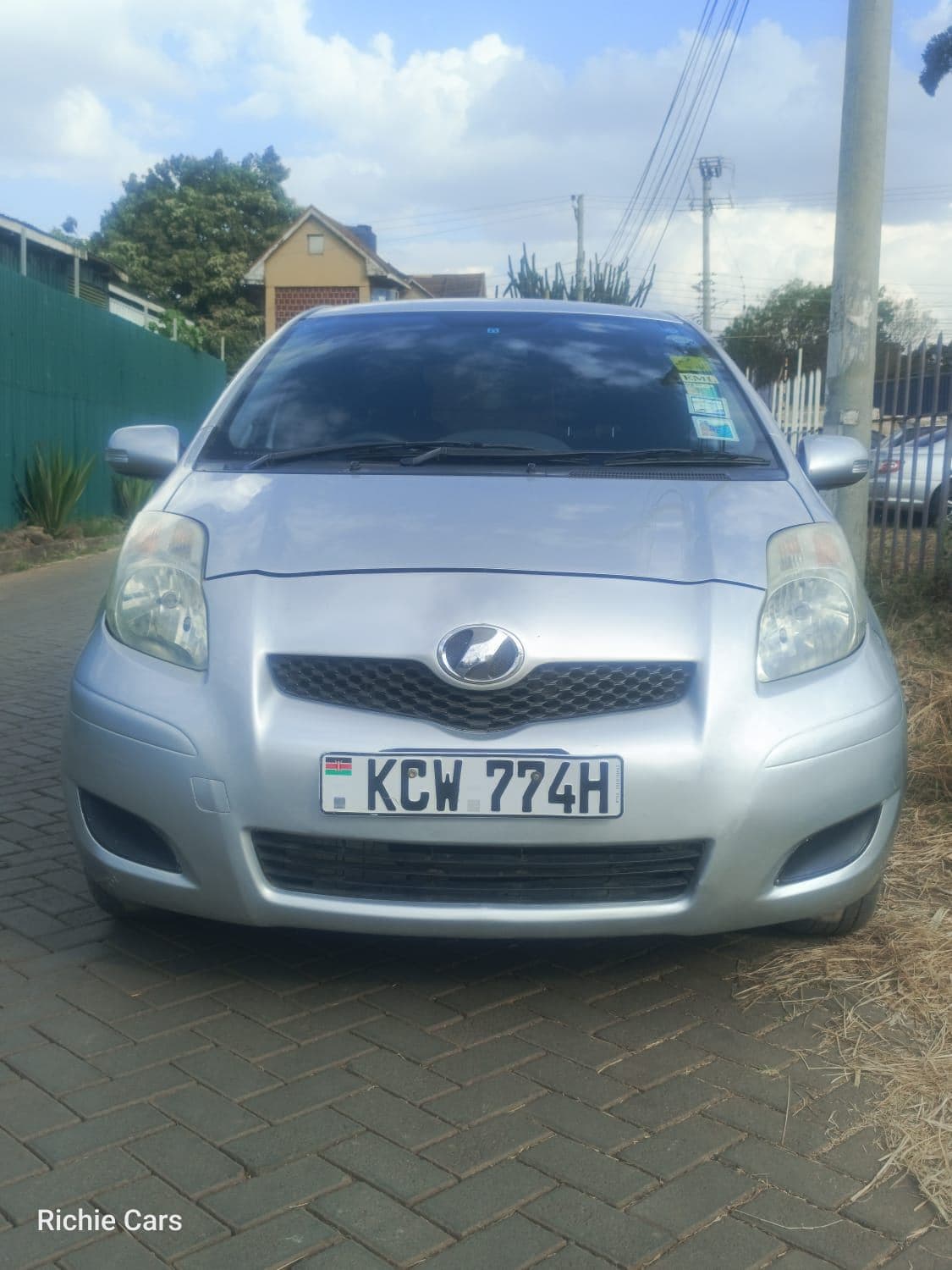
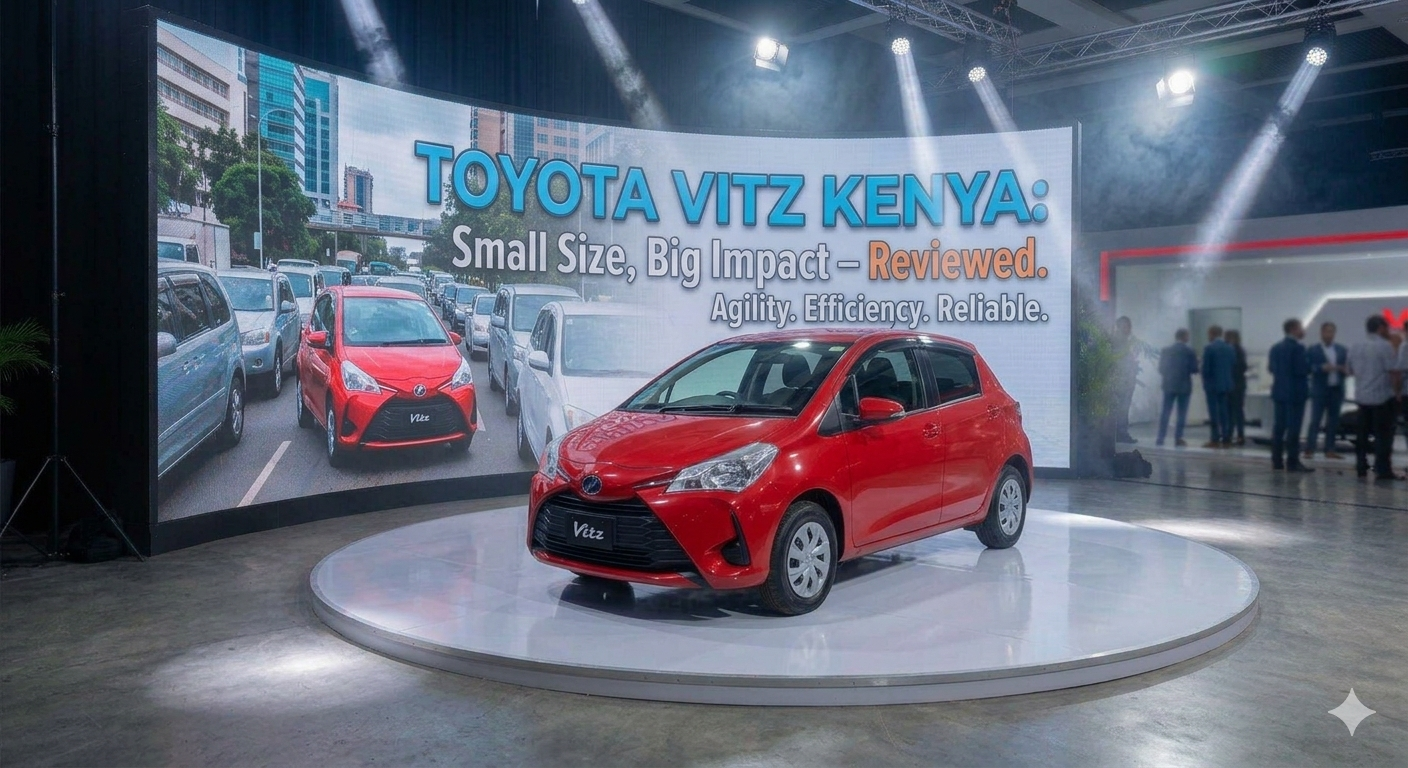
The Toyota Vitz is the benchmark for affordable, reliable motoring in Kenya. It is the most common compact hatchback on Kenyan roads, sold in every town from Nairobi to Mombasa to Kisumu. The Vitz combines exceptional fuel economy (16–20 km/L for petrol models), nationwide spare parts availability, and Toyota's legendary reliability. It is the default choice for first-time buyers, daily commuters, and ride-hailing drivers.
The main limitation is space. The Vitz is a small car. For one or two people commuting daily, it is the most practical choice in its price range. For families or those regularly carrying cargo, a Fielder or Probox is more suitable.
Key specifications
| Feature | Detail |
|---|---|
| Body | Compact 5-door hatchback |
| Seats | 5 |
| Engines | 1.0L (1KR-FE), 1.3L, 1.5L petrol; 1.5L hybrid (limited availability) |
| Transmission | CVT (most common), manual, automatic depending on generation |
| Drive | Front-wheel drive; selected 4WD versions |
| Japanese introduction | 1999 |
| Final production year | 2020 (renamed Yaris globally) |
Vitz generations
First generation — XP10 (1999–2005)
The original Vitz established the formula: small exterior, efficient engine, Toyota reliability. Available with 1.0L and 1.3L petrol engines in both three-door and five-door body styles.
Second generation — XP90 (2005–2010)
Updated body, improved interior. Kenyan imports from this era are common and affordable, often found with the 1.3L engine.
Third generation — XP130 (2010–2020)
The most common Vitz on Kenyan roads today. Introduced CVT transmissions as standard on most grades. Engine options include 1.0L, 1.3L, and 1.5L. The 2019 model represents the final production year of this generation before the Vitz name was retired in Japan.
Kenya price guide — 2026
Current Kenyan online asking-price observations show the following ranges by model year. These are asking prices, not guaranteed transaction prices.
| Model Year | Asking Price Range | Notes |
|---|---|---|
| 2010–2012 | KSh 450,000 – 780,000 | Older locally used units |
| 2013–2014 | KSh 570,000 – 950,000 | Good condition examples |
| 2015–2016 | KSh 750,000 – 1,150,000 | Popular budget range |
| 2017–2018 | KSh 900,000 – 1,500,000 | Fresh imports start here |
| 2019 | KSh 1,100,000 – 1,700,000 | Newest importable units |
Recent observed listings include a 2019 Vitz 1.3 with 26,000 km at KSh 1,550,000, a 2018 Vitz at KSh 1,150,000, and a 2016 Vitz at KSh 885,000. Hybrid Vitz examples sit higher, with a 2019 hybrid observed at KSh 1,500,000.
Fuel economy: what to expect
- 1.0L petrol: 18–22 km/L (best fuel saver)
- 1.3L petrol: 16–18 km/L (best balance)
- 1.5L petrol: 14–18 km/L (best for highway comfort)
- 1.5L hybrid: 25–30 km/L (maximum savings)
Most drivers report between 16 and 20 km/L from one litre of petrol in mixed Kenyan driving. In heavy Nairobi traffic, expect the lower end of these ranges.
Common problems to check
- CVT gearbox (2010–2015): Requires regular fluid changes. Neglected CVT fluid is the single most common cause of expensive repairs.
- Ignition coils: Commonly fail around 120,000–150,000 km on the 1.3L engine.
- Water pump: Not known for durability on the 1NR-FE 1.3L engine.
- Suspension wear: Kenyan roads accelerate wear on shocks, struts, and bushings.
What to inspect before buying
- CVT fluid condition — should be clean, not dark or burnt
- Engine oil leaks — check valve cover and oil pan
- Suspension — test drive over rough roads
- Air conditioning — confirm it blows cold
- Accident history — inspect chassis rails and panel alignment
- Mileage verification — cross-check with service records
- Electrical systems — test all windows, locks, and lights
Who should buy a Vitz?
The Vitz suits first-time buyers, daily city commuters, ride-hailing drivers, and anyone who prioritizes low running costs over space or status. It is the most practical choice in its price range for one or two people.
Skip it if you regularly carry four adult passengers or need significant cargo space. In those cases, consider a Fielder or Probox.